
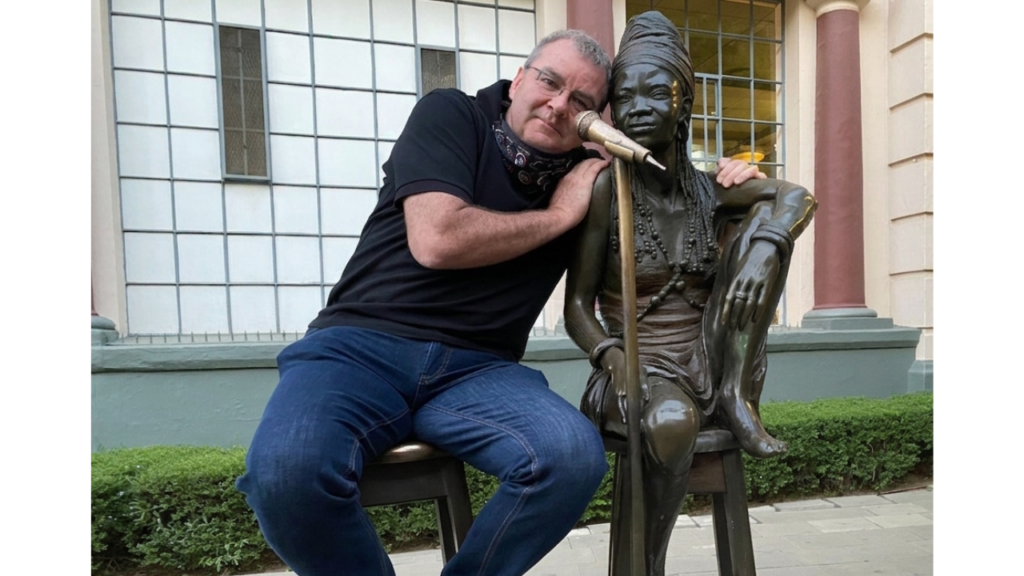
By Bunye Tshikhudo
JOHANNESBURG – Some stories don’t begin with an interview or an archive; ours started with a song, a street and a stranger. The 22nd of November, day 3 of the We The 99%, The People’s G20 Summit, was sunny and actually nice. It was my first time in Newtown, Jozi, and honestly, I didn’t know what to expect.
We were standing right in front of the Market Theatre, surrounded by the weight of history sitting quietly on the walls. My friend suggested that we take a video of her dancing to one popular song – ‘Vul’indlela’ by Brenda Fassie. We started dancing to the Fassie’s classic song’s wedding dance that everyone knows. There was something so joyful about that moment, as Fassie’s voice filled the very space that had held so much South African art.
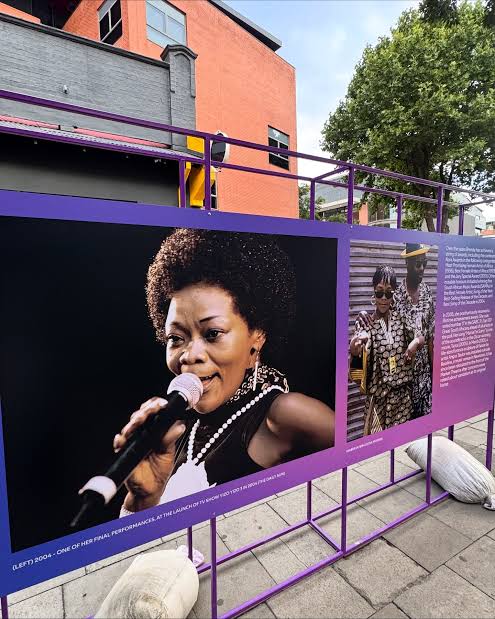
There were boards and old photos of Fassie around when I started admiring the energy she conveyed, even in still images. A random thought hit me that I actually share a birthday month with her. Hers was on the 3rd of November, whereas mine on the 24th.
It felt like a tiny connection, but very personal than cultural. And then this man came almost out of nowhere, stepped forward and started talking.
Not in a disruptive way, but in that “I’ve been holding this in for years” tone and ‘lemme share this message with the Gen Z”. At first, I thought he just wanted to say something quick and walk away, but he gave us a whole sermon about Brenda Fassie. And honestly? It was beautiful.
He didn’t just talk about Brenda Fassie; it felt like he defended her. You could tell he was a real fan. The first thing he said, with so much pride, was that he knew her “when she was a giant. Not the legend on posters or the nostalgic icon people celebrate today, but the real woman, raw, loud, powerful, complicated.” He felt that most people only embraced her now because it was safe for them to do so. Back then, when she was bold and “too gangster,” people judged her harshly.
To him, Fassie wasn’t perfect. She was human. And that was precisely why she was iconic. He spoke about her with the kind of affection reserved for someone you’ve watched fight through life. He said she had weak moments, like anyone, but instead of supporting her, the world chose to point fingers. “People don’t have patience,” he said. “They don’t ask, ‘Are you okay?’ They ask, ‘Why are you doing that?’”
He kept repeating that she was an “epic icon,” not because she behaved the way people expected, but because she lived honestly. Even in her messiest, wildest moments, she carried a truth that made her unforgettable. He said she had a unique way of expressing what she felt, the kind of emotional honesty that comes through in her songs. Her voice, her storytelling, her stage presence… it all came from a place people didn’t fully understand.
What touched me most was how he insisted that Brenda was deeply misunderstood. The stage of life she was in shaped how she behaved, but the public never took the time to look deeper. “You don’t know what stage she was in,” he kept saying. “If you did, you wouldn’t judge her like that.” To him, her struggles weren’t her identity; they were chapters. And instead of offering kindness, society chose judgment.
He ended by saying something I felt in my chest: “Life is beautiful because it gives all of us a chance to embrace misunderstood souls. So, stop being judgmental. Even the Bible said it — Matthew 7. Bye-bye.” As he spoke, I realised he wasn’t only talking about Brenda – as fans affectionately refer to her – but he was talking about all of us. He said people love to embrace perfection, success and the final product, but they never want to adopt someone in their truth, in their realness, and in their process. It made me think of how society loves legends after they’re gone yet rarely gives them grace while they’re still fighting their demons.
We’ve seen it over and over again in South Africa with Fassie, who was judged loudly but celebrated loudly too. Also with Lebo Mathosa, whose boldness was misunderstood before it became iconic. With ProKid and HHP, who carried entire rap movements yet weren’t fully appreciated until later. With Mandoza, whose impact united people far beyond kwaito; and even with artists like Zola 7, Robbie Malinga, Mshoza and Busi Mhlongo, whose actual influence only became clear in hindsight.
It reminded me that people often embrace the legacy, but not the person, the final product, but not the struggle that shaped it. Everything he said hinted at something more profound.
Brenda represented freedom, living loudly and unapologetically. Her vulnerability made people uncomfortable. Her music wasn’t just entertainment – it was a confession, an expression of emotion, and a testament to honesty. Newtown, with its history, felt like the perfect place to hear this story. He made it seem like her spirit still lingers there, in the art, on the walls, and in the music.
Standing in front of the Market Theatre, hearing a stranger pour his heart out about a woman he clearly admired, I understood something: he wasn’t just remembering Brenda Fassie, but reminding us to be kinder; to embrace people in their flawed, human moments; to honour the whole story, not just the highlights.
When I think of Brenda Fassie, the songs that immediately come to mind are Vul’indlela, Too Late for Mama, Weekend Special, Nomakanjani, and Black President. These are not just songs, but moments in South African life, played at weddings, in taxis, at family gatherings, and on radios that never seemed to switch off.
I don’t remember the first time I consciously listened to Brenda Fassie, but I remember her presence. As a child, her music was always somewhere in the background: in the kitchen, on the radio, in the neighbour’s house, in passing cars. The grown-ups would laugh, sing along, sometimes shake their heads and say, ‘Yoh, MaBrrr… yena…’ with a mixture of admiration and concern. Even then, I could sense that she was more than just a singer.
She was a story. My top 3 favourite songs of the legend are “No, Señor, Ntshware, and Jaiva”. These songs make me wish I was there back in the day, and I can see that, yeah, our parents had the time of their lives growing up.
My visit to the Market Theatre was at the right place and at the right time. The story that was shared really lingered in my memory until this moment. MaBrrr… may not have always been understood, but she left some great music that’ll continue to play at weddings, taverns, and celebrations for generations to come. In a few weeks, the Fassie family will be joined by the nation in commemorating the 22nd anniversary of the death of Brenda Fassie on May 09.
Bunye Tshikhudo is a final year student in Journalism & Media Studies at Rhodes University.
Comments shared by Lebeaux.moletsane@gmail.com
