
By Mashilo Mnisi
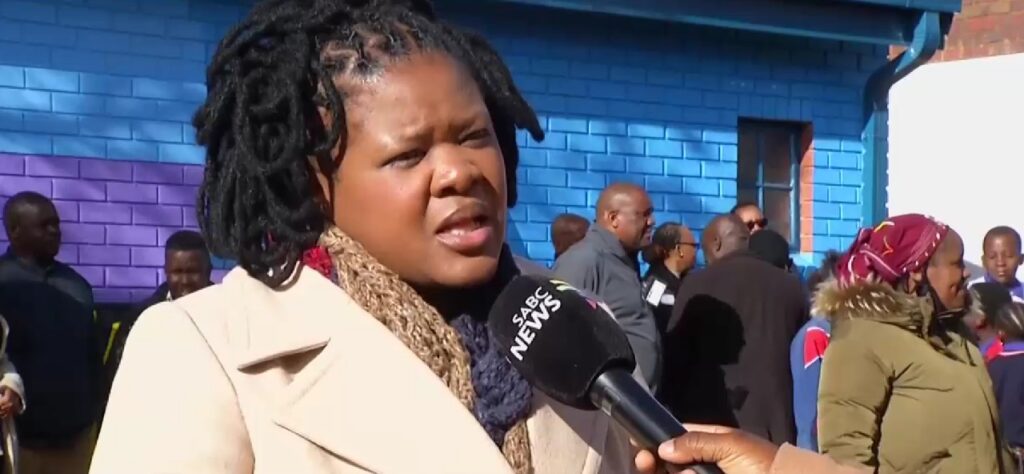
PRETORIA – As South Africa grapples with persistent youth unemployment, President Cyril Ramaphosa takes the lead to circumvent the situation that has become South Africa’s latest crisis. Ramaphosa took to the streets, starting at Sefako Makgatho Primary School where he unveiled his presidential flagship employment programmes, aimed at bridging the gap between education and the labour market. Deputy Minister in the Presidency, Noncebo Mhlauli, admitted that this initiative is a joint programme amongst various government departments.

“And the essence of that is to create young people with a pathway from learning to earning. The programme actually started in 2020 as part of the Covid-19 relief programme, and it continued from then until now. So far, just in the last financial year, the programme has created 252 000 jobs earning opportunities for young people”, she added.
The Presidential Youth Employment Intervention (PYEI) and Presidential Employment Stimulus (PES) are designed to provide young people with dignified, high-quality employment and skills training. Despite citing having started in 2020, will these initiatives offer long-term solutions or merely serve as stopgap measures?
Mhlauli guarantees that the Jobs Boost Outcome Fund will ensure sustainability, and that by the time they finish their programme there’s a job already waiting. Ramaphosa’s latest engagement with youth beneficiaries highlights a community-based, demand-led approach to employment. His visit to Sefako Makgatho Primary School, part of the Basic Education Employment Initiative (BEEI), showcased how young people are placed in public schools as education and general assistants. Ramaphosa vaunted that “this is becoming a world renowned programme. Many other countries are looking at what we’re doing here, and some of them are going to copycat what we’re doing.”
While this provides immediate job opportunities, critics argue that these initiatives lack permanence and do not necessarily lead to sustainable careers.
Although it’s not clear whether the ‘almost two million’ young people brought into the programme translated into jobs – since the deputy minister cited 252 000 of youth – facilities such as the South African Creative Industries Incubator (SACII) was founded some eight years ago. SACII offers technical skills training and business incubation for young artists and entrepreneurs. The Visual Special Effects (VFX) programme, funded through the National Pathway Management Network, is a pioneering effort to connect youth to industry jobs in the creative gig economy. However, questions remain about whether these initiatives can scale effectively to absorb the millions of unemployed youth.
Ramaphosa has positioned these programmes as trailblazers in public employment initiatives. Yet, concerns persist about the temporary nature of these interventions. The Jobs Boost Outcomes Fund, which links payments to employment outcomes, is an innovative funding model, but its long-term viability remains uncertain.

Critics argue that while these programmes provide short-term relief, they do not address structural economic challenges such as job market saturation, skills mismatches and the sluggish economic growth. Without private sector expansion and policy reforms, these initiatives risk becoming revolving doors, cycling young people through temporary employment without securing lasting career opportunities.
These programmes are undeniably ambitious, offering hope and immediate relief to thousands of young South Africans. However, their long-term impact hinges on whether they can transition from government-funded projects to self-sustaining employment ecosystems.
